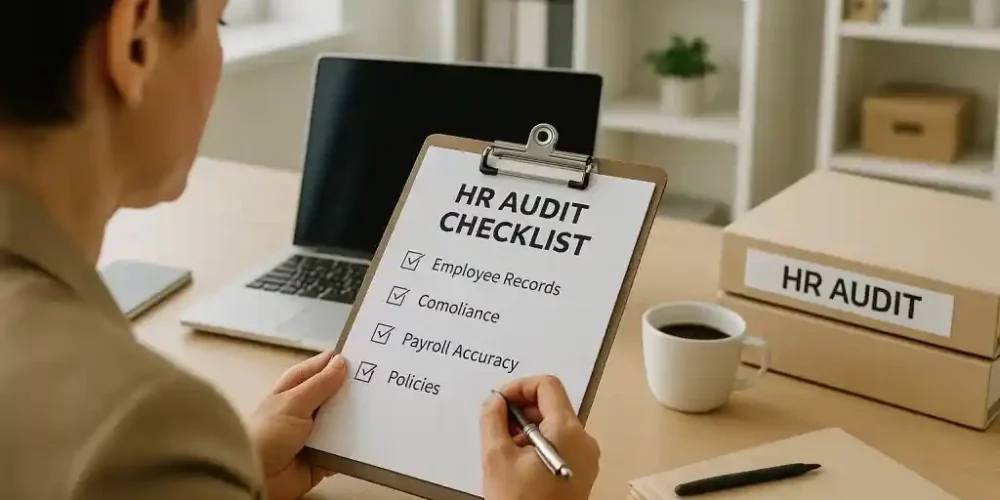
Using an HR audit checklist can greatly benefit small businesses in Ireland. It guarantees adherence to employment laws while enhancing operational efficiency. By identifying gaps in HR processes, these businesses can foster better employee engagement and a positive workplace culture.Additionally, regular updates to the checklist help align practices with evolving standards.
Understanding the practical steps and benefits of implementing this tool may reveal essential insights for organizational growth. What factors should small businesses consider when developing their checklist?
Key Takeaways
- Ensures compliance with Irish employment laws, reducing legal risks and penalties for small businesses.
- Enhances employee engagement by identifying HR process improvements, fostering a positive workplace culture.
- Streamlines HR operations by pinpointing inefficiencies, optimizing resource allocation for small businesses.
- Promotes transparency and trust through employee involvement, leading to a more cohesive work environment.
- Facilitates continuous improvement with regular updates, keeping HR practices aligned with best practices and current legislation.
How to Effectively Use an HR Audit Checklist
To maximize the benefits of an HR audit checklist, small businesses in Ireland should approach the process methodically. First, they must clearly define the scope of the audit, identifying key areas such as compliance, recruitment, and employee relations. Next, it is essential to gather relevant documentation, guaranteeing that policies align with current legislation. Engaging employees in the process fosters transparency and enhances trust, making it easier to implement necessary changes. Additionally, small businesses should prioritize the findings from the HR audit checklist, addressing critical issues first. Regular follow-ups and updates to the checklist guarantee continuous improvement and alignment with best practices. By systematically utilizing the HR audit checklist, businesses can create a more efficient and compliant workplace culture.
Top Benefits of an HR Audit Checklist for Small Irish Businesses
An HR audit checklist offers numerous advantages for small businesses in Ireland, enhancing operational efficiency and compliance. By systematically evaluating HR practices, these businesses can guarantee they meet legal requirements and foster a positive workplace culture.
Key benefits include:
- Improved Compliance: Regular audits help identify gaps in adherence to employment laws, minimizing legal risks.
- Enhanced Employee Engagement: A thorough review of HR processes can reveal areas for improvement, leading to a more engaged workforce.
- Streamlined Operations: Identifying inefficiencies through the checklist allows businesses to optimize their HR functions, saving time and resources.
Utilizing an HR audit checklist not only strengthens compliance but also contributes to a thriving workplace environment, fostering a sense of belonging among employees.

Creating Your HR Audit Checklist: A Step-by-Step Guide
Crafting an effective HR audit checklist is essential for small businesses in Ireland seeking to enhance their human resource practices. The first step involves identifying key areas such as recruitment, employee relations, and compliance with local regulations. Next, businesses should outline specific criteria for each area, guaranteeing they are measurable and relevant. Engaging stakeholders in the development process can foster a sense of ownership and alignment with organizational goals. Once the checklist is drafted, it should be tested in practice, allowing for adjustments based on feedback and real-world application. Regular reviews and updates will guarantee the HR audit checklist remains relevant, ultimately promoting a culture of continuous improvement and compliance within the organization.
Avoid These Common Pitfalls With Your HR Audit Checklist
What common oversights do small businesses in Ireland face when implementing their HR audit checklist? Many organizations inadvertently overlook critical elements that can undermine the effectiveness of their audits.
- Neglecting Employee Feedback: Failing to include input from employees can lead to a skewed understanding of workplace dynamics.
- Inconsistent Documentation: Inadequate record-keeping hampers the ability to track compliance and performance effectively.
- Ignoring Legal Updates: Not staying current with employment laws may expose businesses to legal risks and penalties.
Next Steps After Completing Your HR Audit Checklist
Completing the HR audit checklist marks a pivotal moment for Irish small businesses, as it paves the way for strategic improvements. Following the audit, the next steps involve a thorough analysis of the findings to identify key areas for enhancement. Businesses should prioritize issues based on their potential impact on performance and compliance. Implementing changes requires developing an action plan with clear timelines and responsibilities assigned to relevant team members. Regular follow-ups are essential to monitor progress and guarantee accountability. Additionally, fostering an open dialogue with employees can enhance engagement and facilitate smoother shifts. By embracing these next steps, small businesses can strengthen their HR practices and cultivate a more cohesive workplace culture.
Frequently Asked Questions
What Is an HR Audit Checklist Used For?
An HR audit checklist is utilized to systematically assess an organization’s human resources practices. It identifies compliance gaps, evaluates policies, and enhances overall efficiency, ensuring alignment with legal standards and organizational goals for improved workforce management.
How Often Should Small Businesses Conduct HR Audits?
Small businesses should conduct HR audits annually to guarantee compliance, identify risks, and improve processes. Regular assessments foster a culture of continuous improvement, aligning human resources with organizational goals and enhancing overall operational efficiency.
Who Should Perform the HR Audit Checklist?
An HR audit checklist should be performed by qualified HR professionals or external consultants. Their expertise guarantees thorough evaluations, identifying compliance gaps and opportunities for improvement, ultimately benefiting the organization’s overall human resource management strategy.
Can an HR Audit Checklist Improve Employee Satisfaction?
An HR audit checklist can greatly enhance employee satisfaction by identifying workplace issues, ensuring compliance, and fostering a positive environment. This structured approach promotes transparency and engagement, ultimately contributing to a more supportive organizational culture.
What Resources Are Needed for an HR Audit Checklist?
An HR audit checklist requires resources such as relevant policies, employee records, compliance guidelines, industry benchmarks, and a qualified team. These elements facilitate a thorough review, ensuring alignment with best practices and fostering organizational improvement.
Conclusion
In summary, implementing an HR audit checklist is a strategic move for small Irish businesses seeking compliance and operational efficiency. By systematically identifying gaps and enhancing HR processes, organizations can foster a positive workplace culture and mitigate legal risks. Regular updates to the checklist guarantee alignment with evolving regulations, ultimately supporting continuous improvement. Consequently, an HR audit checklist not only serves as a compliance tool but also as a catalyst for employee engagement and organizational growth.
You May Also Like To Read: